
Factors To Consider
Feeling comfortable and confident in your wedding dress on your big day is the most important thing. Consider your body type and the styles you are comfortable wearing, and choose the most flattering. Unsure of your bodytype? Ask yourself this question when searching for your wedding dress: Is there a particular part of your body you want to accentuate?
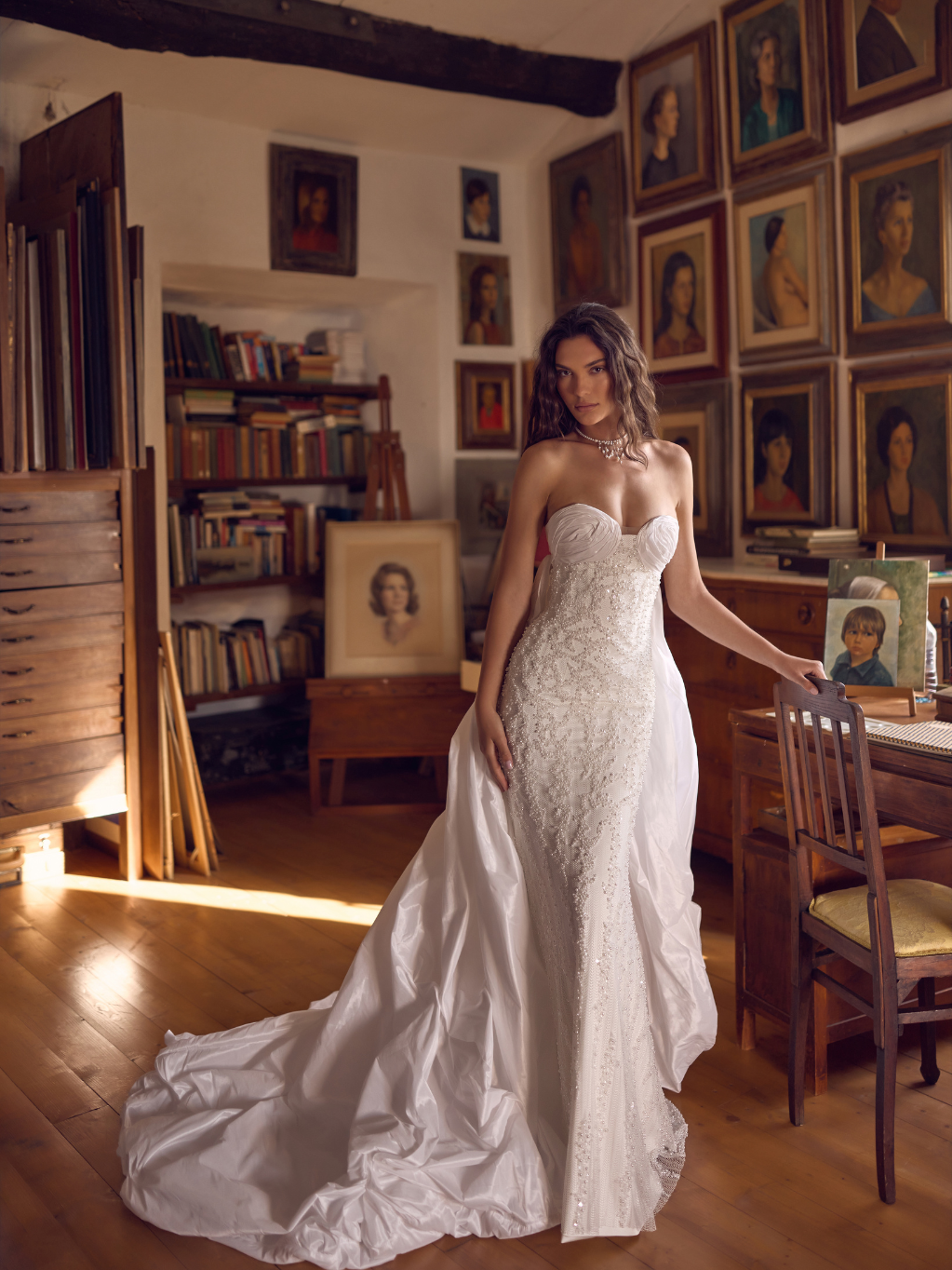 Ithaca from the Wona Concept Amore in Fiore collection
If it is your back, try dresses with a low-cut or open-back design. If you love your collarbones, try a strapless wedding gown. What is the formality of your wedding? Formal or casual, this will also help determine what type of dress you choose. What is your location, and what will the weather be like? This will be another major factor in the decision-making process. If you’re still feeling overwhelmed, don’t forget that your bridal consultant is extremely experienced and can help guide you as little or as much as you want to help you find the right dress and your ultimate wedding style.
Types of Wedding Dresses
Things to consider include shape, necklines, and fabric. In terms of shape, ball gowns are a classic style with a full skirt and fitted bodice. An A-line or straight wedding dress is similar to a ball gown, but the skirt flares slightly from the waist. Mermaid or fit-and-flare dresses are fitted through the bodice and hips, then flare out at the knee or lower. Column dresses are slim-fitted with a straight silhouette that lengthens the body. Tea-length dresses are shorter, often reaching mid-calf, and are perfect for more casual or vintage-inspired weddings.
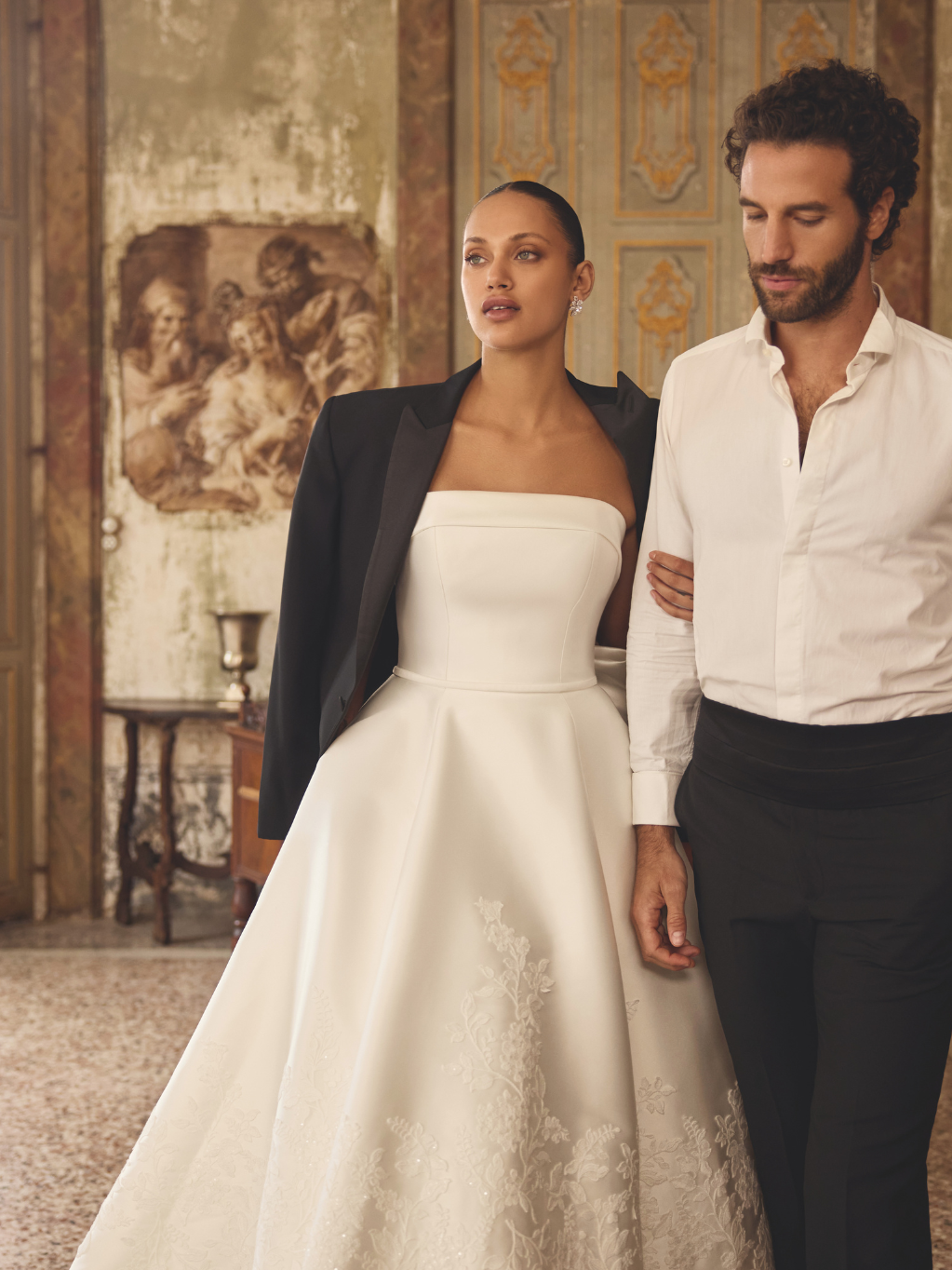 Kaydence from the Justin Alexander L’Amore collection
There are many necklines to choose from, too: V-neck, scoop, strapless, square—try as many styles as you can to determine what flatters your bust, shoulders, and décolletage. An important element of dress shopping is the variety of fabrics to choose from; there’s a little to learn before you start shopping. Ultimately, the fabric you choose will depend on your personal style and the overall vibe of your wedding. Also consider accessory options such as a veil, bubble sleeves or fingerless gloves. By stepping out of your comfort zone and exploring the different types of wedding dresses available, you can find the perfect style that fits your personality, budget, and overall wedding vision.
Fabric Choices
Mikado: This glossy, contemporary, and structured fabric offers structure and form to your wedding dress, shaping your figure like the wedding gown was made just for you. It’s a heavyweight fabric, perfect for wedding dresses, corsets, fit-and-flare silhouettes, and A-line skirts.
Silk/Satin: It’s easy to feel radiant in silk and satin wedding dresses because the focus is on you. If you envision a minimalist look, a silk wedding dress could be perfect for you. Remember to select the right undergarments with this style of dress, as they can often be quite fine and easily show through what is underneath.
Sequin/Beaded: For the bride who truly wants to shine on her day, intricate handmade beaded dresses and sequin gowns are perfect for the romantic, low-light of an indoor ceremony or the glimmering sunset at an outdoor wedding. From long sleeves to open backs and high necklines to spaghetti straps, the options here are endless.
Crepe: With flattering, structural seam lines, a crepe wedding gown will sculpt and flatter the silhouette. Fabrics feel substantial and look beautiful, but have stretch for comfort and dancing. The contemporary nature of a chic crepe gown makes it read as effortless.
Lace: Lace wedding dresses can encompass a classic, vintage feeling or a completely modern or boho feel. A long-sleeved lace wedding dress with a high illusion neckline is breathtakingly beautiful, as is a strapless, sculpted lace look. For a wedding theme, lace suits a garden setting perfectly.
Georgette: The softness and matte allure of flowing georgette fabric add a feminine, luxurious accent to your wedding-day look. Whether in a sculpted, fitted-and-flare shape or a gathered skirt that flows away from the body, georgette wedding gowns are timeless yet oh-so-chic.
Wedding Dress Budgets
There are several budgeting tips to help you stay on track with your expenses. Firstly, having a wedding budget set in place is important because it will keep you and your partner accountable in your spending. It will also guide your wedding planning decisions, which you and your fiancée make, such as your venue, guest limit, etc.
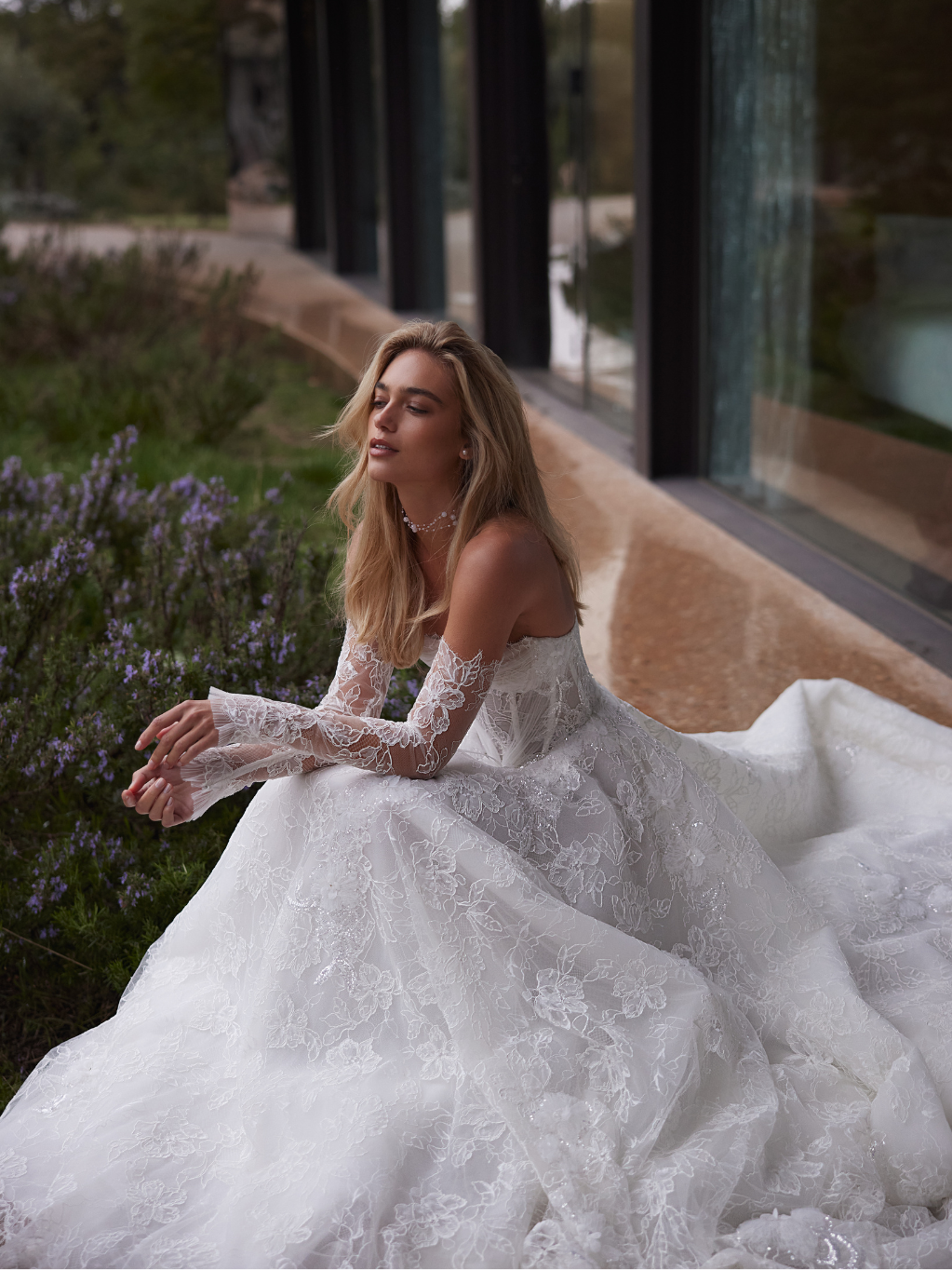 Siren from the Eva Lendel Less Is More V Collection
Prioritise what’s most important in your dream gown so you can focus on those features and avoid overspending. Keep alterations and accessories factored into the price of your wedding dress to avoid any unexpected expenses.
Wedding Dress Shopping Tips
First, schedule appointments at bridal boutiques that fit your style and budget. Try on a variety of styles, shapes, and fabrics, even if they’re not exactly what you envisioned; you may be pleasantly surprised by what you love. Take pictures of yourself in each dress to compare later.
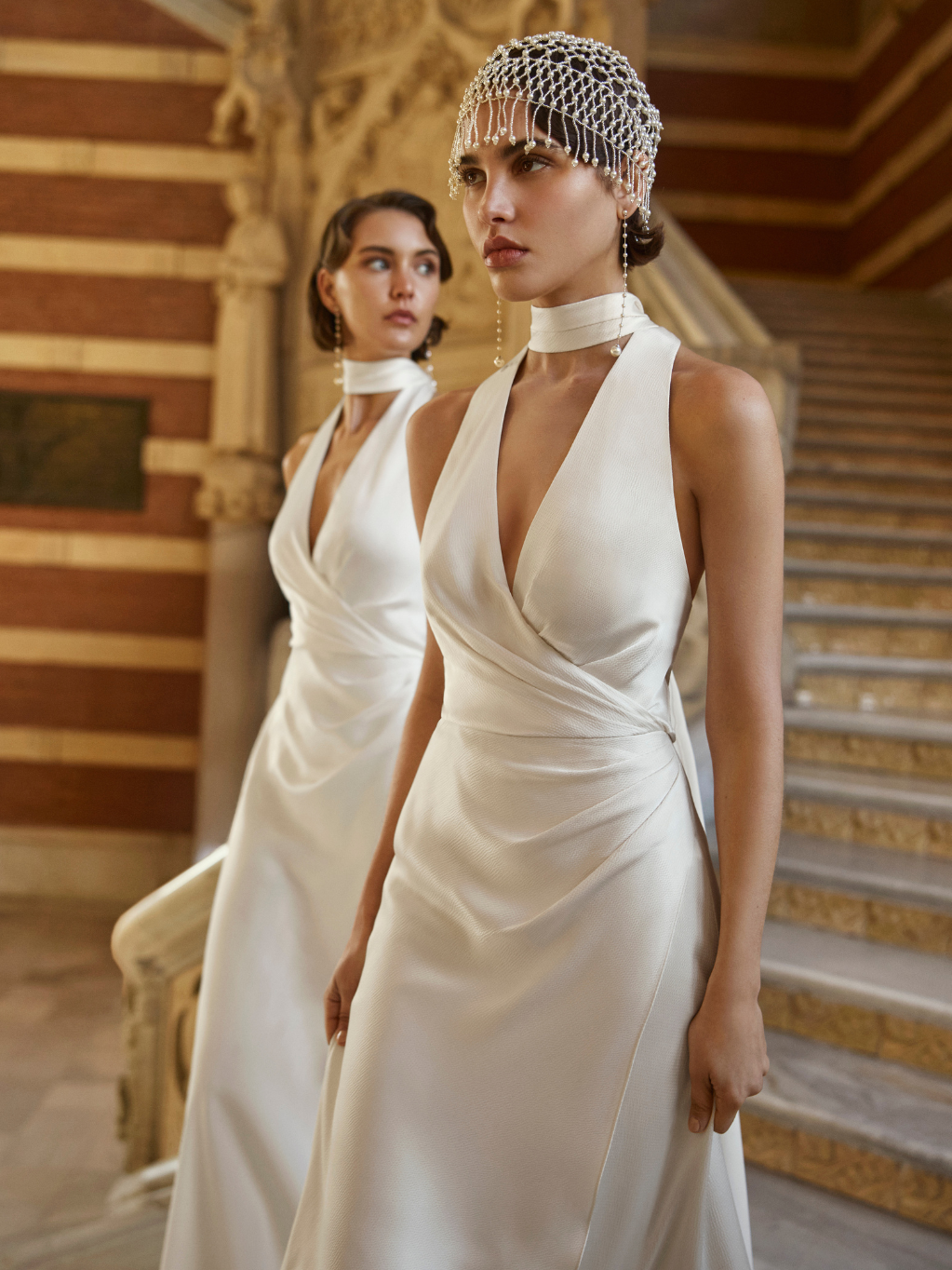 Bradley from the Rosa Clará Gatsby Collection
Another suggestion is to bring along a trusted loved one or someone from your bridal party who can offer honest, constructive feedback and support during the decision-making process. Above all, remember that the perfect dress is one that makes you feel your most confident and beautiful self on your special day. With patience, planning and a positive attitude, you’ll be sure to find your dream dress.
- Gráinne